MOOC
My contribution to teaching and learning extends beyond formal classroom settings into open and online education. Since the early years of my appointment as Head of E-Learning in 2014, MOOCs had already emerged as an important national agenda through MEIPTA, and this became one of the key areas in which I became involved. At Universiti Malaya, my role in MOOC development grew more substantially when the university began collaborating with FutureLearn and ADeC took on the coordinating role for course development.
In the early phase of this work, I contributed by coordinating the development of two spearhead courses: Islamic Calligraphy: An Introduction to the Art of Handwriting and Introduction to Malay Language. These courses were slow to develop at first, not because of lack of promise, but because this was a new space for many academics and for us as coordinators as well. We were supporting educators while also learning how to operate effectively in a new mode of open online course development. Despite those challenges, both courses were successfully published in 2017 and received encouraging responses.
As the initiative matured, the scale of the work expanded significantly. Under a new phase of institutional support, ADeC secured funding, equipment, and staff to establish an Instructional Design section and work towards an ambitious target of 40 MOOCs. By the end of my tenure at ADeC in 2024, the university had managed to publish 42 courses and one ExpertTrack under that development phase, and the wider FutureLearn course list for Universiti Malaya has since grown further. Alongside this development work, I also pushed for formal recognition of MOOC developers through a revenue-sharing model. Although the implementation was completed after my tenure, the initiative itself and the groundwork for the mechanism were part of the efforts I helped drive.
MOOC leadership at Universiti Malaya
In the early phase of Universiti Malaya’s FutureLearn collaboration, I contributed by coordinating the development of two spearhead courses: Islamic Calligraphy: An Introduction to the Art of Handwriting and Introduction to Malay Language. These courses were slow to develop at first, not because of lack of promise, but because this was a new space for many academics and for us as coordinators as well. We were supporting educators while also learning how to operate effectively in a new mode of open online course development.
As the initiative matured, the scale of the work expanded significantly. Under a new phase of institutional support, ADeC secured funding, equipment, and staff to establish an Instructional Design section and work towards an ambitious target of 40 MOOCs. By the end of my tenure at ADeC in 2024, the university had managed to publish 42 courses and one ExpertTrack under that development phase, and the wider FutureLearn course list for Universiti Malaya has since grown further. Alongside this development work, I also pushed for formal recognition of MOOC developers through a revenue-sharing model. Although the implementation was completed after my tenure, the initiative itself and the groundwork for the mechanism were part of the efforts I helped drive.
Building Pathology MOOC
My own MOOC, Building Pathology: The Science Behind Why Buildings Fail, was designed not only as a standalone online course, but also as a demonstration of the kind of business and educational model the university should aim for in open learning. I positioned it as a lifelong-learning course with a continuing professional development element, so that it could serve professional learners seeking upskilling and certification, while also being integrated into undergraduate teaching as part of the blended-learning design of BIB2014.
In practice, I use the MOOC within the first four weeks of the semester as part of the course’s self-directed learning component. This created an important instructional design challenge because the course needed to serve diverse learners at once: undergraduate students, public learners, and building professionals. It had to be accessible enough for new learners, meaningful enough for professionals, and structured enough to support formal university teaching.
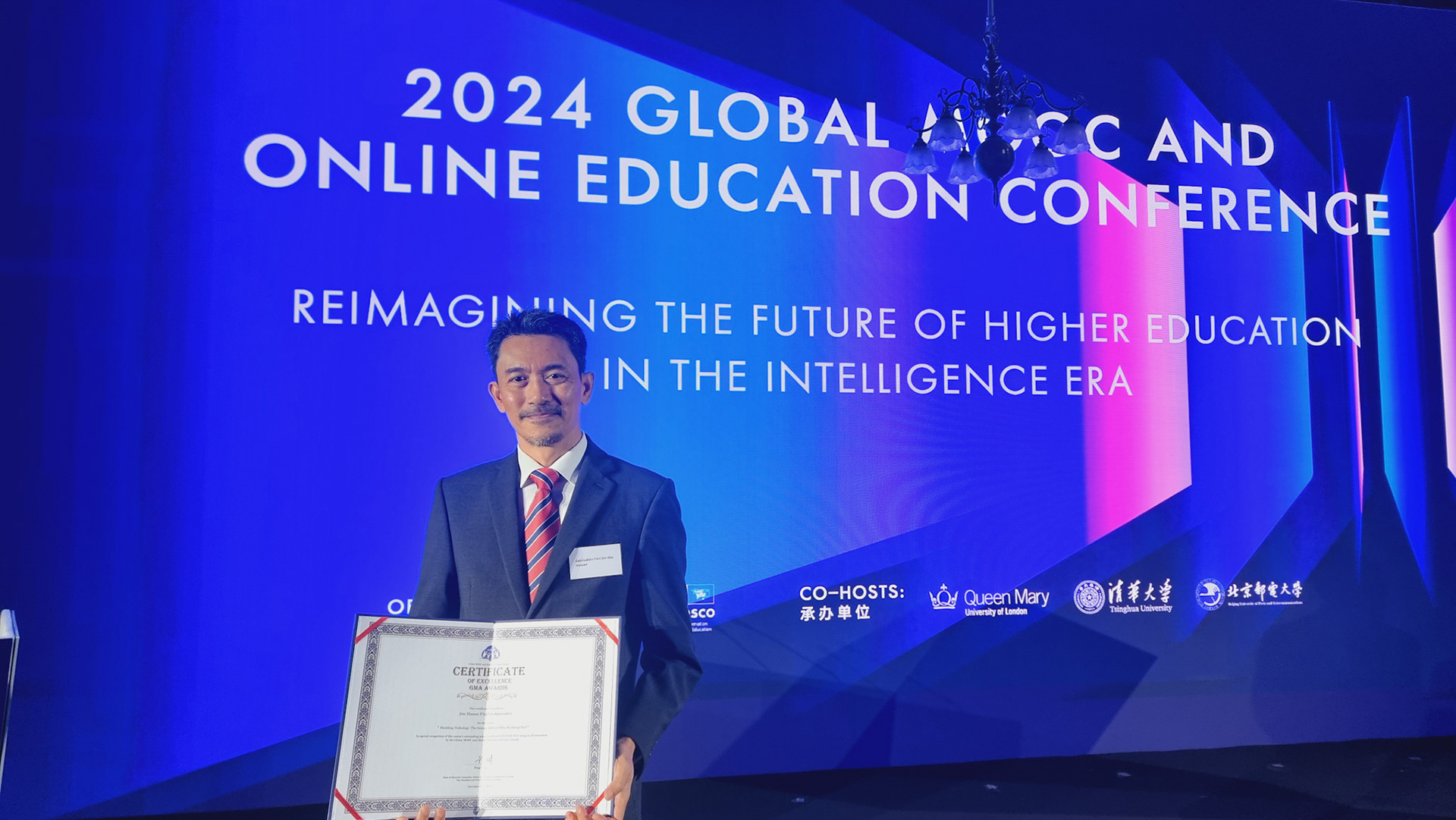
One of my key aims was to create conditions for co-learning within the online space itself. Undergraduate students could interact with building surveying professionals and other public learners, many of whom came from different countries. This made the course not only an online learning environment, but also an international learning opportunity. Through discussion prompts, questions, and probing activities, learners were encouraged to learn not only from the course content, but also from one another. The international award received by the course in 2024 affirmed the careful instructional design work developed together with my team at ADeC.
Collaborative Open-Learning Projects
My contribution to open learning also extends through international collaborative projects in digital education, particularly through Erasmus+ Capacity Building in Higher Education initiatives. In these projects, I contributed as an e-learning consultant and specialist, supporting work that went beyond institutional course delivery into wider questions of digital pedagogy, reusable learning design, and higher-education capacity-building. This dimension of my work is important because it shows that my engagement with teaching and learning has also taken place through cross-border collaboration and shared educational development.
Projects such as ENeA SEA and ACoRD focused on developing context-sensitive digital learning resources that could support professional and curricular learning at scale. ENeA SEA developed evidence-based e-learning tailored to Southeast Asian needs in early nutrition, with relevance for continuing professional development and healthcare practice. ACoRD, in turn, focused on the co-creation of reusable learning objects and digital pedagogy methods for healthcare curricula, building the capacity of Malaysian educators and learning technologists through international partnership.
Another related project, aTM – Promoting Modern Talent Management Practices in Asian Higher Education Institutions, represents a broader form of institutional development through international collaboration. Taken together, these projects show that my contribution to open learning is not confined to creating courses. It also includes helping shape the systems, partnerships, and reusable educational approaches that support digital learning more broadly.
Featured open-learning contributions
Building Pathology: The Science Behind Why Buildings Fail
FutureLearn / Universiti Malaya
An award-winning open course designed for both professional lifelong learning and undergraduate blended learning.
FutureLearn / Universiti Malaya
An award-winning open course designed for both professional lifelong learning and undergraduate blended learning.
Islamic Calligraphy: An Introduction to the Art of Handwriting
FutureLearn / Universiti Malaya
One of Universiti Malaya’s spearhead FutureLearn courses, coordinated during the early phase of UM’s MOOC development.
FutureLearn / Universiti Malaya
One of Universiti Malaya’s spearhead FutureLearn courses, coordinated during the early phase of UM’s MOOC development.
Introduction to Malay Language
FutureLearn / Universiti Malaya
A spearhead FutureLearn course that helped establish UM’s early presence on the platform.
FutureLearn / Universiti Malaya
A spearhead FutureLearn course that helped establish UM’s early presence on the platform.
ENeA SEA
Erasmus+ Capacity Building in Higher Education
A regional digital education project supporting evidence-based e-learning for healthcare professionals in Southeast Asia.
Erasmus+ Capacity Building in Higher Education
A regional digital education project supporting evidence-based e-learning for healthcare professionals in Southeast Asia.
ACoRD
Erasmus+ Capacity Building in Higher Education
A project focused on co-creating reusable learning objects and strengthening digital pedagogy for healthcare curricula.
Erasmus+ Capacity Building in Higher Education
A project focused on co-creating reusable learning objects and strengthening digital pedagogy for healthcare curricula.